Dental SEO: Google’s Rules for Practice and Dentist Profiles, the Review Reply That Cost $23,000, and Where 1.17 Million Patient Searches Are Decided
· Royking Niba
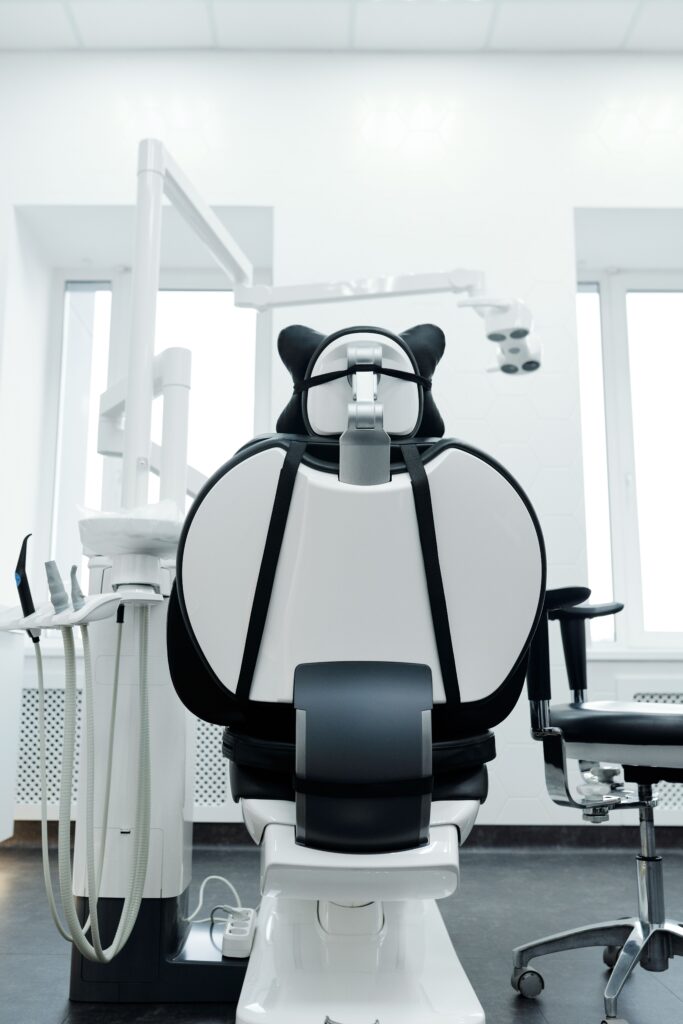
Dental SEO is the work of getting a dental practice in front of patients at the moment they search, and for most dental searches that moment is decided in two places: Google’s local results for “near me” and emergency searches, and AI Overviews for cost questions. The job therefore splits into a Business Profile structure that follows Google’s rules for practices and individual dentists, a website that treats health information as the “Your Money or Your Life” topic Google says it is, and a review process that never discloses anything about a patient. Below are Google’s own words on each part, the two US dental settlements over online disclosures, and a demand map of ten patient searches showing which result type decides each one.
What Google says decides local dental rankings
Quoted from Google Business Profile Help, “Tips to improve your local ranking on Google”, checked on 11 October 2026. Google’s help pages carry no last-updated date, so check the page again before you rely on any detail here. Google defines three factors: “Relevance is how well a Business Profile matches what someone is searching for”, “Distance refers to how far each business is from the customer who’s searching”, and “Prominence means how well-known a business is.” Two further sentences on the same page matter to every practice: “More reviews and positive ratings can help your business’s local ranking”, and “There’s no way to request or pay for a better local ranking on Google.”
For a dental practice the levers are the same as for any local business, which I cover field by field in Google Business Profile optimization. What makes dentistry different is the next three sections: practitioner profiles, health content, and patient privacy in reviews.
Practice profile or dentist profile: Google’s practitioner rules
Google’s “Guidelines for representing your business on Google” (checked 11 October 2026, no last-updated date shown) allow an individual practitioner, such as a doctor, dentist or lawyer, to have a dedicated profile when “They operate in a public-facing role” and “They can be contacted directly at the verified location during stated hours.” The same section adds that “Support staff should not create their own Business Profiles” and that “A practitioner shouldn’t have multiple Business Profiles to cover all of their specializations.”
Where a practitioner is the only public-facing practitioner at a branded location, Google says “it’s best for the practitioner to share a Business Profile with the organization”, named in the format [brand/company]: [practitioner name], with Google’s own example “Allstate: Joe Miller”. Business names must not carry marketing taglines, and Google states that “Including unnecessary information in your business name isn’t permitted”, which is how keyword-stuffed names such as “Best Cosmetic Dentist Downtown” end in suspension, the scenario covered in Google Business Profile suspended.
The decision table below applies those sentences to five common practice set-ups. It is my reading of the guideline, not a Google table.
| Practice set-up | Profiles that fit the guideline | What breaks it |
|---|---|---|
| One dentist, practice trades under a brand name | One shared profile, named “Brand: Dr Name” | A second profile for the dentist alone at the same address |
| One dentist, practice trades under the dentist’s own name | One profile in the dentist’s name | Adding “implants” or a city to the name |
| Group practice with four public-facing dentists | One practice profile, plus one profile per dentist if each can be reached at the verified location during stated hours | Profiles for front-desk or other support staff, or a dentist profile per specialty |
| Practice with a separately branded orthodontic department | Practice profile plus a department profile with its own distinct name | A department named identically to the main practice |
| Dentist who works two days a week at a second clinic | Check whether they are reachable there “during stated hours” before creating anything | A profile at an address where the dentist cannot be contacted in person |
Dental content is health content, and Google treats it that way
Google’s “Creating helpful, reliable, people-first content” page (last updated 2026-10-05) says its systems give more weight to content showing strong experience, expertise, authoritativeness and trust on topics that could significantly affect people’s health, financial stability or safety, which Google calls “Your Money or Your Life” topics. It also says “Of these aspects, trust is most important.” A page about root canal recovery, implant risks or a child’s first visit sits squarely inside that definition.
In practice that means each treatment page names the dentist who wrote or reviewed it and their qualifications, describes risks and costs plainly rather than only benefits, and dates the review. The wider framework is in my piece on E-E-A-T and SEO. A practice that publishes fifty thin “dentist in [suburb]” pages to cover its catchment is building exactly what Google describes as doorway pages, explained with the arithmetic in doorway pages, and that is a route to a ranking loss rather than to new patients.
On structured data, Google’s LocalBusiness documentation (last updated 2026-09-08) says “Use the most specific LocalBusiness sub-type possible”, and schema.org defines a Dentist type that sits under both LocalBusiness and MedicalBusiness, so a practice home page should use Dentist rather than the generic LocalBusiness.
The review reply that cost a practice $23,000
Reviews help local ranking, in Google’s own words, and every practice is tempted to answer a bad one with the facts of the case. In the United States that reply can be a HIPAA Privacy Rule breach, because confirming that someone is a patient, or describing their treatment, discloses protected health information. The US Department of Health and Human Services Office for Civil Rights (OCR) has published two settlements with dental practices over exactly this kind of disclosure:
| Practice | Amount paid to OCR | What OCR’s page says happened | OCR page dated |
|---|---|---|---|
| Elite Dental Associates, Dallas, Texas | $10,000, plus a corrective action plan | “Social Media Disclosures of Patients’ Protected Health Information” | 2 October 2019 |
| B. Brandon Au, DDS, Inc., d/b/a New Vision Dental, California | $23,000 | Impermissible disclosure of patient protected health information “in response to online reviews” | 14 December 2022 |
The safe pattern is a reply that is identical whether or not the reviewer is a patient: thank them, say the practice cannot discuss anyone’s care in public, and give a phone number or email for the practice manager. Anything that confirms a visit, a treatment, a date or a bill belongs in that private conversation. This is not legal advice, and a practice outside the US has its own privacy law to check, but the principle travels well: a review reply is a public page that Google indexes.
Where patient searches are decided: a demand map of ten searches
The figures below are Ahrefs US data pulled on 11 October 2026: average monthly search volume, keyword difficulty, and whether Google currently shows a local pack or an AI Overview on the results page. Treat the volumes as estimates and the result features as a snapshot that changes.
| Patient search | US searches a month | Difficulty | Local pack | AI Overview |
|---|---|---|---|---|
| dentist near me | 759,000 | 0 | Yes | No |
| pediatric dentist near me | 81,000 | 0 | Yes | No |
| invisalign cost | 69,000 | 0 | No | Yes |
| teeth whitening near me | 60,000 | 0 | Yes | No |
| emergency dentist near me | 59,000 | 0 | Yes | Yes |
| emergency dentist | 49,000 | 0 | Yes | Yes |
| dental implants cost | 41,000 | 28 | No | Yes |
| dentures cost | 24,000 | 0 | No | Yes |
| root canal cost | 21,000 | 10 | No | Yes |
| wisdom teeth removal cost | 12,000 | 7 | No | Yes |
| Total | 1,175,000 | 5 of 10 | 7 of 10 |
Three things fall out of the table. First, the five searches with a local pack carry 1,008,000 of the 1,175,000 searches, or 85.8%, so for a practice the map listing is where most demand is decided. Second, that share is inflated by one giant term, “dentist near me”. Take it out and the remaining nine searches split cleanly: 249,000 (59.9%) are local-pack searches and 167,000 (40.1%) are cost questions. Third, every one of the five cost questions shows an AI Overview and none shows a local pack. A practice that wants to appear for “root canal cost” needs a well-sourced, dated cost page that can be cited, which is the territory of how to rank in AI Overviews, not a profile tweak.
The limitation is the sample: ten searches chosen to show both behaviours, not a census of dental demand. Run the same check on your own city and treatment mix with the method in my keyword research checklist before you decide where the budget goes.
A dental SEO checklist built from the sources above
- One profile per practice location, plus practitioner profiles only for dentists who can be reached there during stated hours.
- Business name exactly as it appears on the sign and the letterhead, with no treatments or cities added.
- Treatment pages written or reviewed by a named dentist, with risks, recovery and price ranges stated and a review date.
- A cost page per high-volume treatment, sourced and dated, aimed at the AI Overview rather than the map.
- Dentist structured data on the location page.
- A written review-reply policy that never confirms a patient relationship in public.
- No city pages that only swap the suburb name.
When a practice has already lost visibility, whether through a suspended profile or a ranking drop after an update, the diagnosis comes before any of the above. That process is set out in my Google penalty recovery guide. The same local rules applied to a trade business are in roofing SEO.
Leave a Reply