Google Business Profile Suspended: The Two Levels of Suspension, the Appeal Steps, and the 60-Minute Evidence Window
· Royking Niba
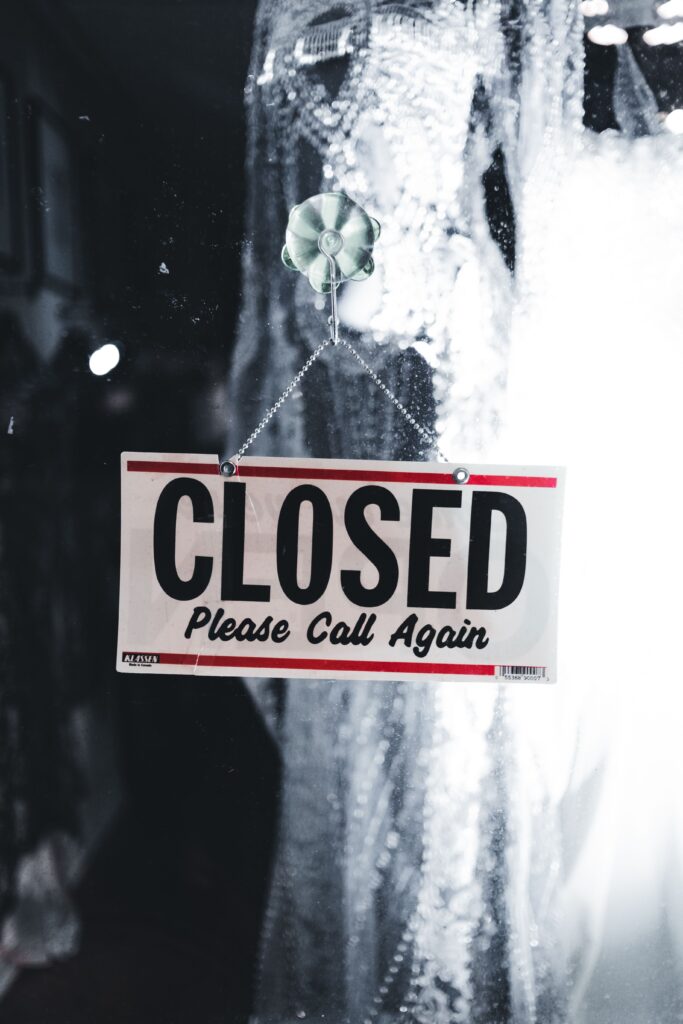
If your Google Business Profile is suspended, Google has decided the profile, or the account that manages it, breaks one of its Business Profile guidelines. The way back is an appeal through Google’s Business Profile appeals tool, ideally with documents that prove the business is real and matches what the profile says. Two details catch most people out: if the suspension comes from a restriction on your Google account, the account appeal has to succeed before the profile appeal can, and once you open the evidence form you have 60 minutes to submit it. Below are Google’s own words on each step, a table matching the common triggers to the guideline and the evidence that answers them, and a worked timeline.
What Google says a suspension is
Quoted from Google’s Business Profile help page “Fix suspended or disabled profiles”, checked today, 7 October 2026. Google’s help pages carry no last-updated date, so check the page again before you act on any detail here.
We may suspend or disable Business Profiles that don’t follow our guidelines.
Google Business Profile Help
The guidelines themselves end with the sentence that gives Google that power: “Google reserves the right to suspend access to Business Profiles on Google or other Google Services to individuals or businesses that violate these guidelines.” There is no algorithm to reverse and no traffic curve to study. A suspension is a policy decision about a specific profile, which makes it closer to a manual action than an algorithmic demotion, and the fix works the same way: correct the cause, then ask for a review.
The two levels: profile or account
The same help page describes a second, wider kind of restriction that is easy to miss. Google’s wording, in order:
- “Your account may be restricted when you violate our policy.”
- “As a result of an account restriction, the Business Profiles you manage are suspended.”
- While restricted, “you won’t be able to create or claim other profiles.”
- “To lift the restriction, you can provide a reason and submit an appeal for your account.”
- “Once the account restriction is lifted, to remove the Business Profile suspension, you can submit an appeal.”
| Profile suspended | Account restricted | |
|---|---|---|
| What is affected | One Business Profile | Every profile the account manages |
| Can you create or claim other profiles? | Not stated as blocked | No |
| How many appeals | One, for the profile | Two, in order: account first, then each profile |
| Most likely cause to check first | Something on the profile itself | Behaviour across the account, or a policy breach by the manager |
The practical consequence is the order of work. If you appeal the profile while the account is still restricted, you are appealing the wrong thing first.
Common triggers, the guideline behind each, and the evidence that answers it
Google’s suspension notice tells you which policy it applied, so start there. This table is my own mapping of the most common triggers to the exact guideline sentence they break and the evidence types Google lists as acceptable. The guideline quotes are from Google’s “Guidelines for representing your business on Google”, checked today.
| Trigger | Guideline it breaks, quoted | Fix before appealing | Evidence that answers it |
|---|---|---|---|
| Keywords, slogans or locations added to the business name | “Including unnecessary information in your business name isn’t permitted, and could result in the suspension of your Business Profile.” | Change the name to the real-world name on your signage and paperwork | Business registration or licence showing the legal or trading name |
| A virtual office or rented mailing address | A rented mailing address the business does not operate from “isn’t eligible for a Business Profile.” | Use a real location, or switch to a service-area profile and hide the address | Utility bill or lease for the real premises |
| A P.O. box or remote mailbox as the address | “P.O. boxes or mailboxes located at remote locations aren’t acceptable.” | Replace with the real address | Utility bill at that address |
| More than one profile for the same business | “There should only be one profile per business” | Remove or merge the duplicate, unless it is a permitted practitioner or department profile | Registration showing one business at one address |
| Tracking number or website that redirects elsewhere | “Do not provide phone numbers or URLs that redirect or ‘refer’ users to landing pages or phone numbers other than those of the actual business.” | Use a number “under the direct control of the business” and the business’s own site | Phone bill in the business’s name |
| Name does not match the real-world business | Your name should match how it is “used consistently on your storefront, website, stationery, and as known to customers.” | Make the profile match the signage, not the other way round | Photos of signage plus registration |
The evidence column draws only on the types Google names on its appeals help page: “Official business registration”, “A business license”, “Tax certificates” and “Utility bills for the business”. A trigger that no document can answer, such as a duplicate profile, has to be fixed on the profile itself before any appeal has a chance.
The appeal, step by step
Google’s help page says to make sure the profile follows all the guidelines before you appeal, then to use the Business Profile appeals tool. In order:
- Fix whatever broke the guideline. An appeal on an unchanged profile asks Google to approve the same breach again.
- Open the appeals tool and sign in with the Google account that manages the profile.
- Select the suspended profile and read the restriction reason and the policy Google cites.
- Submit the appeal and add your evidence. Google states: “Once you open the evidence form, you must submit it within 60 minutes or it won’t be attached to your appeal.”
- Wait for the decision by email. Google says “Appeal reviews and decisions can take up to 5 business days”, and “You will only receive one email notification with an appeal decision.”
- Do not stack appeals. Google’s appeals page says: “Do not submit multiple appeals for the same issue before receiving a decision.”
The appeals tool shows each appeal’s status as one of “Submitted”, “Approved”, “Not Approved”, “Can’t be appealed” or “Eligible for appeal”. Managers with ten or more suspended profiles are asked to submit a spreadsheet with the profile IDs and evidence rather than appealing one at a time.
The 60-minute evidence pack
The 60-minute limit is the step that fails appeals for practical rather than policy reasons. Someone opens the form, goes looking for a utility bill, finds it is a phone photo of a crumpled page, and the window closes. Assemble everything before you open the form:
- The business registration or licence, showing the exact name now on the profile.
- A recent utility or phone bill in the business name, at the exact address on the profile, if the profile shows an address.
- A tax certificate if you have one, as a second document that ties the name to the business.
- Clear, readable scans or PDFs, named so you can find them in seconds.
- Photos of permanent exterior signage if the name or address is in question. These are not on Google’s list, so treat them as supporting material rather than a replacement for the documents above.
A worked timeline: how long a suspension can last
This is a model built on Google’s published maximum of 5 business days per decision. The assumptions are mine and labelled: every decision arrives on the last day Google allows, each fix takes one business day, and nothing else delays the process. It is not a promise that Google will meet its own maximum.
| Scenario | Steps | Business days, at Google’s stated maximum |
|---|---|---|
| Profile suspended, appeal approved first time | Fix (1) + profile decision (5) | 6 |
| Account restricted, both appeals approved first time | Fix (1) + account decision (5) + profile decision (5) | 11 |
| Profile suspended, first appeal Not Approved, second approved | Fix (1) + decision (5) + new fix (1) + decision (5) | 12 |
| Account restricted, profile appeal Not Approved once | Fix (1) + account (5) + profile (5) + new fix (1) + profile (5) | 17 |
Seventeen business days is more than three working weeks without a profile in Maps for a business that depends on it. The table makes two points. An account-level restriction roughly doubles the minimum because the appeals run in series, not in parallel. And every rejected appeal costs a full decision cycle, which is why fixing the profile properly before the first appeal is worth more than writing a persuasive reason. The model ignores evenings, weekends and holidays, which only make it longer, and it assumes decisions take the full five days, which in practice they may not.
What not to do
- Do not create a new profile for the same business. Google’s guidelines say “There should only be one profile per business”, and a second profile for the same location adds a fresh breach to the original one.
- Do not keep editing while the appeal is open. Fix first, then appeal, then wait. Changing the name or address again mid-review changes the thing Google is reviewing.
- Do not pay anyone who promises reinstatement. The appeals tool is free, and the decision is Google’s alone.
- Do not ignore the website. If the profile was suspended for a name or address mismatch, make sure your own site, its contact page and its location pages show the same name and address as the corrected profile.
A Business Profile suspension is separate from your website’s standing in Google Search. A suspended profile does not by itself mean your site has a problem: Business Profile suspensions are decided under the Business Profile guidelines and appealed through their own tool, while website manual actions sit in Search Console and are reviewed there. If both your Maps listing and your organic traffic dropped at the same time, treat them as two investigations. The organic side starts in my Google penalty recovery guide, and the written-request side of a website manual action is covered in the reconsideration request that gets accepted.
Related reading
- Google Penalty Recovery: how I diagnose and reverse a traffic collapse
- Manual action penalty or algorithmic demotion: how to tell which one hit you
- Google penalty removal: the reconsideration request that gets accepted
- Doorway pages: Google’s four examples, and the city-page arithmetic
- What are backlinks? What Google says they do
Leave a Reply